High Plains Gardening
The gardening website of the Texas High Plains Region




The color pink, a tint of red, lighter and softer than red.
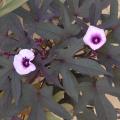
A tuber mostly grown in containers or a summer groundcover, not considered cold-hardy in the Panhandle. Striking purple-black foliage with small light magenta flowers, similar in appearance to bindweed. Ipomoea’s are members of the bindweed family, Convolvulaceae. One bad relation doesn’t have to trash the family, however.
Fame flower, flame flower, or rock pink, is a Midwestern native succulent. Ideally suited to western rock gardens, short fleshy narrow leaves emerge in late spring, followed by wiry stems where tiny rose/pink flowers open up each afternoon. In fall, the top foliage dies off and the plant heads underground for the winter. Because of it's unusual nature, it can be tucked in anywhere at the front of a border, just don't forget where you've planted it when doing spring cleanup. Reseeds slightly.
Phemeranthus calycinum was formerly known as Talinum calycinum.
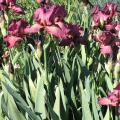
Distinctive flat, thin upright leaves with flowers arising from the stem.
Texas, or scarlet sage is a perennial to the Southern U.S. and Texas. In the Texas Panhandle, it is sold as a bedding plant, since it is not cold hardy. Some varieties will come back due to re-seeding. Many varieties are available, some are more drought tolerant than others, such as 'Forest Fire', while 'Lady in Red' requires medium water-use beds. Summer long blooming, choose your color among scarlet, red, rose, pink, coral and white. As with most sages, hummingbirds, butterflies and bees are attracted to them.
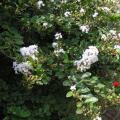
Grown in the South for decades, most people think of crape myrtle as a native American plant; it is however native to China and Japan. Small tree or large shrub that is cold hardy to Zone 7. I’ve grown the same crape myrtles for over 20 years, but they’re planted close (too close!) to my bricked house on both the northeast and northwest corners. They’ve been stem hardy, not just root hardy, and have grown up to about 10-12’. In most cases, crape myrtle will not grow into tree form in the Panhandle, but there are mature, tree size crape myrtles in Amarillo.
Prairie dropseed is smaller than both alkali or giant sacaton, more fitting for the city garden. A warm season bunch grass, prairie dropseed is a most attractive low or medium water-use grass with graceful green foliage. The seed heads emerge in late summer into fall with light pink seeds, that is said to naturalize some, but not invasively. A slow grower. Foliage turns a pleasing golden orange in the fall. Native throughout the Great Plains, including Texas. Tolerates most soil conditions.