High Plains Gardening
The gardening website of the Texas High Plains Region




The color yellow or closer to the color yellow than other colors.
Bigelow's tansyaster is easy to confuse with Tahoka daisy but is not as showy. Bigelow's aster is a fall blooming biennial, with far fewer purple rays and a smaller, yellow brown center disk. It populates plains in Colorado, Arizona and New Mexico. In the fall, whole fields will wear a purple haze due to this tansyaster.
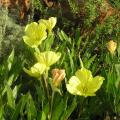
Oenothera macrocarpa, and O. missouriensis have been used interchangeably. Native over a wide range including the plains and wooded areas, carries the common name, Missouri evening primrose, bigfruit sundrops and Ozark Sundrops.
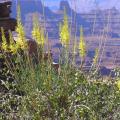
Elegant and stately desert perennial. Soft light blue green leaves. Stalks can tower above desert shrubs to 5-6 feet, but usually 2-4 feet, with racemes of yellow flowers similar to cleome or spider plant flowers in springtime. Requires excellent drainage and lean soils. Thrives on selenium rich soils. Native to canyonlands in SW U.S.
Verbascums make a presence in the wildflower or cottage garden and mixed border, whether it be this common mullein, or another species with showier flowers. Verbascums can be either biennial or perennial, but will make enough seeds you’ll never be without. Some are drought tolerant and thrive in poor, but well drained soil, others may need medium water use and a richer soil.
Littleleaf mountain mahogany is the shortest of the mountain mahoganies usually sold. Small, narrow, leathery looking evergreen leaves on many intricate branches. Small yellow flowers in springtime and feathery seed plumes in the fall. The shrub is densely branched and slow growing.
Dark green, semi-evergreen aromatic leaves are the feature most prized, along with the tiny yellow daisy-like flowers that bloom spring to fall. Damianita prefers full sun and lean soil and does well in heat and temperatures to zero degrees. Daminaita will lose its leaves in cold winters.
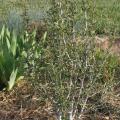
Curl leaf mountain mahogany is a medium height evergreen shrub native to elevations between 5000-10,000 feet throughout the Southwest. Small oval shaped dark green leaves lightly curl under at the margins are evergreen and aromatic. Small yellow flowers in spring time that develop into grain size fruits with a feathery tail attached to one end (similar to other mountain mahoganies). Slow growing and long lived, it can reach a height of 20 feet or more, but is more typically 6-12 feet. Densely branched. Cold hardy, drought and heat tolerant.
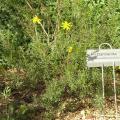
The Calylophus genus is one of the best Southwest native plants for Panhandle gardens. Heat and drought tolerant, long blooming with little to no care, what garden would be without it? Sunny yellow 4 petaled sundrop flowers bloom in an explosion in spring, and respectably during the remaining growing season, especially when given a once a month inch of water during drought conditions. Each individual flower lasts only a day, tight compact mounds sport the orange spent blooms as well as the new bright yellow flower.
Turpentine shrub is an evergreen shrub native to the southern parts of the Southwest, and only marginally cold hardy on the Caprock. It will survive when in a sheltered location and soil with excellent drainage, along rocky cliffs, outcrops and arroyos. Avoid compact clay soil, or amend clay soil very well for drainage with inorganic amendments. Yellow autumn flowers.
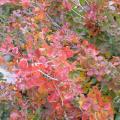
Sumacs are known for brillian fall foliage. Ground cover woody shrub 24-30" tall with dark shiny green leaves that turn a thrilling orange-red in the fall. Small yellow flowers at springtime.
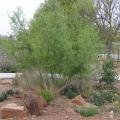
New Mexican privet can be viewed either as a tall shrub or smaller tree. New Mexican privet will flower (tiny yellow) before leafing out with small oval glossy green leaves to be followed with black berries in the fall. Heat and drought tolerant will live in most soils and water-use areas. Attractive taller plant for the home landscape, similar to the yaupon holly in form.