High Plains Gardening
The gardening website of the Texas High Plains Region




A woody plant is a plant that produces wood as its structural tissue, usually trees and shrubs.
Lower growing Southwestern native shrub, both cold and heat tolerant. Finely cut greenish silver leaves. Flower stalks with insignificant flowers. Grows best in soils with good drainage. Will grow in heavy clay soil if grown among grasses.
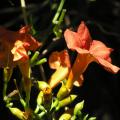
People either love trumpet creeper or hate it. The first three years, I couldn't wait for it to mature, filling with red-orange trumpet shaped flowers. It seems I've spent the next 20 years trying to kill it. Trumpet vine will die, but only for those who want it to live. If a gardener gives it the death wish, it will be sure to flourish. Native to most of the eastern half of the U.S., it is low water-use, thrives in heat. Must be in a sunny location to bloom profusely. Considered to be invasive, especially when over watered. Not particular about its soil.
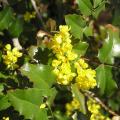
Mahonia repans is one of my favorite plants with four seasons of interest. Low growing and spreading evergreen shrub is native throughout the Rocky Mountains. Bright yellow berries in spring are followed by black berries in summer and reddish winter foliage. The leaves are thick, glossy and holly shaped. Creeping Oregon grape holly prefers amended, humusy soil that replicates its native habitat as an understory plant in woodlands, but is low water-use once established. It will spread to cover an area, but not invasive. Very attractive!
Outstanding shrubby perennial fragrant herb for the garden! Very good soil drainage is the key to growing lavender, it does not like moist, compacted clay soil. Lavender appreciates supplemental irrigation every 2-4 weeks, if not provided naturally. Trim back in late winter or early spring by not more than a third, or just trim down last years flower stems. Triming too much off the plant will kill it.
Black dalea, an autumn blooming southwest native shrub, should be used more in the home xeric landscape. Growing only to about 3 feet, black dalea spreads out with thin, wiry branches and small, green, compound leaves. The shrub becomes completely covered with tiny purple flowers as to be enshrouded in a purple cloud.
Many references are unsure of its cold hardiness to zero, and it had thrived nicely in my city garden in Amarillo. However, it does not seem to be reliably cold hardy. It's a beautiful shrub that provides stunning late fall color that is worth replanting.
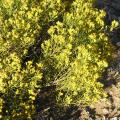
Broom snakeweed is a small mounded subshrub with yellow greenish thread-like leaves, native throughout the Southwest and western half of the North American continent. In the fall, it becomes covered in small golden yellow flowers. Bees and nectar butterflies are attracted to it in numbers. Usually grows to only a foot tall.
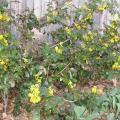
Oregon grape holly is an evergreen holly-like shrub native to the Pacific Northwest Rockies down into California. Upright, it is slow growing but can reach a height of 8 feet. Best when grown in shade, especially out of afternoon sun. Prefers a more humusy soil but will only required once a month watering when established, however, can also be placed in medium and high water-use areas. Bright yellow flowers in spring, followed by dark blue berries in summer. The thick, glossy, holly-like leaves have spines at the points. Leaves turn from green to red in winter.
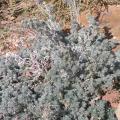
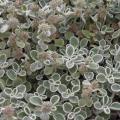
The only draw back to this pretty, silver-edged groundcover is its flowers! If only it didn’t, it would be a perfect no maintenance, no water groundcover for hot, sunny locations. You can see the tiny ball shaped flower heads in the picture, which look rather indistinct. However, after flowering, they turn an ugly shade of brown that mar the beautiful leaves unless you shear them off. Though a creeping groundcover, silver-edged horehound is not invasive like the common horehound, M. vulgare.
If you find yourself in Palo Duro Canyon at the end of April or beginning of May, the purple haze dotting the cliffsides is feather dalea. Sporadic blooms will open after showers throughout summer, though never as profuse as in springtime. With monthly irrigation in a xeric garden, feather dalea adds color and texture with it's twiggy, but sturdy, appearance. Small purple flowers combined with white plumes carries the haze impression from a distance.
Maypop, or passion vine, is a perennial vine native to eastern and southern areas of the U.S. In the South, maypop grows into a woody vine, but in northern areas like the Texas Panhandle, it will die back to the ground. Lobed, dark green leaves, beautiful, unique flowers emerge in the summer to fall, producing edible fruit. Maypop will sucker, especially when ample watering is present. Passion vine, the most cold hardy of the genus, should be cold hardy to Zone 6.
Lavender cotton, or gray santolina is a low mounding woody subshrub that should live on the lean side. Not that it won't overgrow if fed. It will maintain its compact shape in poorer soils without amending or fertilizing. Small silver gray leaves cover the shrub. Tiny yellow button flowers appear in summer. Evergreen, the santolinas are native to the Mediterranean area. Aromatic and edible, it's leaves were used as a flavoring in broths, sauces and grain dishes. Low water-use.
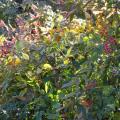
Nandina is one of a few single species genera, a member of the barberry family (Berberidaceae). Though one species, several cultivars are available to add texture and interest to our low maintenance, low water-use landscape in either sun or shade. I plant mine in full shade, as there are few shrubs that will flower there. I personally favor protecting Nandina with afternoon shade, if planted in a sunny location.
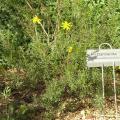
Dark green, semi-evergreen aromatic leaves are the feature most prized, along with the tiny yellow daisy-like flowers that bloom spring to fall. Damianita prefers full sun and lean soil and does well in heat and temperatures to zero degrees. Daminaita will lose its leaves in cold winters.
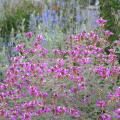
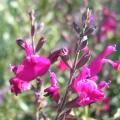
Raspberry hybrid bush sage is very similar in appearance to Salvia greggii, blooming April through November. It's two-lipped flowers with a pleasant deep raspberry color, and the mahogany calyces contrast nicely. 'Raspberry Delight' is a hybrid cross between Salvia greggii 'Furman's Red' and and a high altitude collection of Salvia microphylla from central Arizona. Woody and brittle branches with small oval shaped leaves that hang on to the plant sometimes through the winter, as they do on S. greggii.
Green santolina is an evergreen shrub native to the Mediterranean region. Its grass-green color makes it a welcome addition to any landscape. Medium and low water use, cold hardy, sun and heat tolerant, it prefers poorer soil. Aromatic green leaves that resemble those of the cypress. Yellow button flowers in summer.