High Plains Gardening
The gardening website of the Texas High Plains Region




Plants are known to be cold hardy to at least -10°F.
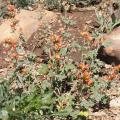
Scarlet globemallow is a welcome addition to any xeric or High Desert garden. Small coral flowers bloom from May (sometimes April) through into the fall. Although scarlet globemallow will survive with no additional moisture in our climate, once a month watering insures steady blooms. The plant is similar in appearance to S. ambigua, which can bloom coral, white, lavender and pink.
Agaves are striking and architectural Southwest native plants and are included in a group of plants I term Southwest evergreens. They are unusual in that at maturity, they only flower once, and then die. for this reason, some classify them as multiannual, rather than perennial. However, as they common name suggests, it takes many years before they flower. Leaves of the Agave are arranged in a spiral beginning from a near invisible stem, forming a rosette.Agaves vary in size from 4-6 inches to larger than man-size.
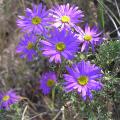
Tansy aster is an annual native to the Southwest and throughout the Plains even into Canada. Fernlike, or tansy-like (tannacetifolia) light green foliage with beautiful aster-like lavender flowers with yellow disks about 1 1/2 to 2 inches across. Blooms from late spring through fall. A once a month watering will keep the blooms coming throughout the summer. It will keep its compact shape in lean, poor soil but will become much larger in well amended soil. Minimal amending is recommended. Tansy aster is another example of our natives plants giving so much, asking so little in return.
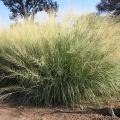
Giant sacaton is one of the largest bunch grasses native to the Southwest, like alkali sacaton on steroids. Seems to thrive in poor soils with no supplemental irrigation. It will grow even bigger with added moisture. Thick textured grass blades, it will rival pampas grass for size and beauty, although it plumes are near as showy, giant sacaton has a flowing fountain appearance. A warm season grass, it is cold hardy and thrives in sun and heat.
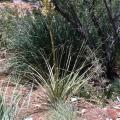
Bear grass is similar in appearance to yucca and clumping grass, but is neither. Usually found growing in high desert areas, along cliffs and rocky slopes. Thin succulent grasslike yellow-green leaves emerge from a trunkless center, are pointed and sharp edged. A plume-like inflorescence with many tiny cream colored flowers emerges early summer. Cold hardy, drought and heat tolerant.
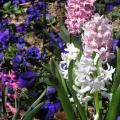
Hyacinths are a much loved and very fragrant spring bulb, flowering in March and early April in our area. Clusters of bell-like flowers dangle from a central stem. Native to Asia, hyacinths were one of the early favored flowers by the Persians, Turks and Europeans, in fact, practically everyone who came in contact with them. Easy to grow in full sun to part shade in average garden soil. Hyacinths come in many pastel colors, both single and double flowers.